How to Browse a Bandung Traditional Food Market Considerately
Learn how to greet vendors, ask about unfamiliar foods, handle produce, and make purchases with ease at a traditional Bandung market.
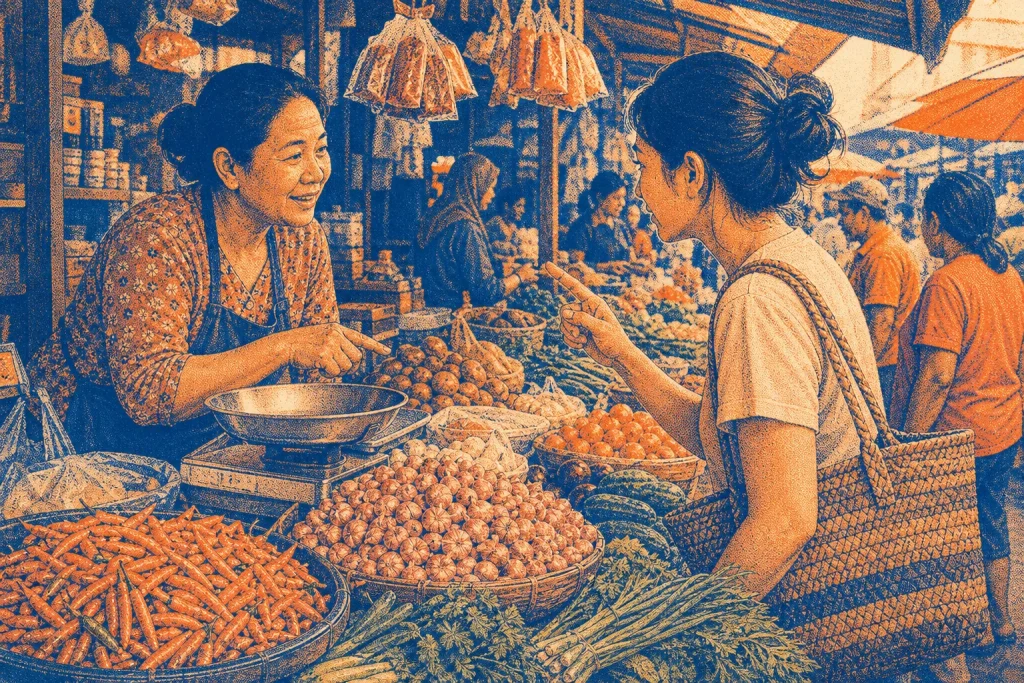
The first aisle at a traditional food market in Bandung can feel like a conversation already in progress: a vendor is weighing shallots, someone is asking about chilies, and shoppers are moving past with baskets. You do not need to know every local custom before joining in. A little attention to the pace of the stall, a polite greeting, and a clear question can help you browse without getting in the way.
Market etiquette is less a set of strict rules than a way to make a busy exchange comfortable for both sides. Vendors are working, goods may be displayed for handling or may need to be selected by the seller, and prices can depend on the item and amount. Watch first, ask when unsure, and treat each purchase as a brief conversation rather than a transaction to rush through.
Begin by reading the stall
Pause at the edge of a stall instead of stepping straight into the space where the vendor is weighing or serving. Notice how other customers approach, where they stand, and whether they point to items or ask the vendor to choose them. In a crowded aisle, keep your bag close and leave room for people to pass.
A simple greeting in Indonesian can open the exchange, but the best phrase depends on the situation. “Selamat pagi” means “Good morning” and is used as a morning greeting. “Permisi” is commonly used to get someone’s attention politely or to signal that you need to pass. A smile and a calm tone are useful even if you speak little Indonesian; if you miss a detail, ask for it to be repeated rather than pretending to understand.
Before touching food, look for cues. Customers may pick through sturdy produce themselves, while delicate greens, cut ingredients, or ready-to-eat foods may be handled by the vendor. If you cannot tell, ask, “Boleh pilih sendiri?”—“May I choose it myself?” The question gives the seller an easy chance to show you what is appropriate at that stall.
Ask questions that help the seller answer
For an unfamiliar ingredient, point rather than reach across the display and ask its name or how it is used. “Ini apa?” means “What is this?” If you want to know whether something is spicy, “Pedas?” is a concise way to ask. For a more specific question, “Ini biasanya dimasak bagaimana?” asks how it is usually cooked. Short questions are easier to follow amid market noise, and a vendor can answer with a word, gesture, or recommendation.
Ask one thing at a time. A sequence of questions about ingredients, freshness, preparation, and price can hold up the exchange while others wait. If the seller is serving another customer, wait for a natural pause rather than repeating yourself. When a reply is unclear, repeat the key word or use a translation app discreetly; avoid holding up a screen as if the vendor must read a long explanation.
Questions about food restrictions deserve particular care. If you need to avoid an ingredient, name it plainly and ask whether it is included, but do not assume that a shared utensil or preparation area is suitable for a serious allergy. For a health-related restriction, rely on clear information and consult a qualified professional about what level of risk is acceptable. A market vendor may not be able to verify every ingredient in a prepared dish.
Handle produce and samples with permission
Some goods invite close inspection; others bruise, wilt, or are sold by weight. Let the vendor show you how to choose a fruit or vegetable if the display is unfamiliar. Do not squeeze soft produce or rearrange a pile to reach an item underneath. If you want a particular amount, describe it or indicate a container size, then confirm the price before the seller weighs or bags it.
Sampling is not automatically expected. If a vendor offers a taste, accept only if you want it and follow their lead about where to stand or what to use. If no sample is offered, ask before taking one. Keep fingers away from uncovered ready-to-eat food, and do not place personal items on a counter where food is being prepared.
For fresh food, keep the exchange simple: choose what you intend to buy, allow the seller to pack it, and check the bag before leaving. If you change your mind after something has been weighed or prepared, say so promptly and politely. The vendor can then decide whether it can be put back or needs another solution.
Confirm the price and complete the purchase
Prices may be displayed, called out, or discussed after you indicate what you want. Ask “Berapa?”—“How much?”—before agreeing to a purchase if the price is not clear. For a quantity, ask the vendor to repeat the amount and total. This is not an accusation; it is a practical way to make sure you have understood each other.
Haggling is not required. At some stalls, especially those selling everyday food by a set amount, the stated price is simply the price. If you ask whether there is a lower price, keep the tone friendly and accept a no without turning the conversation into a dispute. If the amount does not suit you, thank the seller and step away courteously before the item is packed or prepared.
Pay the amount you agreed on and take a moment to check your change. Cash is useful for many small transactions, but avoid displaying a large wallet or leaving belongings unattended while you search for it. If you are buying several items, repeat the list briefly so both you and the vendor can confirm what is going into the bag.
A hypothetical purchase of an unfamiliar snack
Imagine that you are at a busy Bandung market with a modest cash limit and want to try a tray of unfamiliar wrapped snacks. You do not know the name, filling, or spice level. Wait until the vendor finishes serving the person ahead, say “Permisi,” and point to the tray. Ask “Ini apa?” and then “Pedas?” If the answer remains unclear, use a translation app for the key question rather than holding up the line with a long conversation.
Next, ask the price and whether you may buy one piece. Suppose, purely for this hypothetical, the vendor explains that the snacks are sold only in a group and gives a total that fits your limit. Decide whether that group is acceptable before ordering. Let the vendor bag the food, pay the agreed amount, and check your change. The result is a purchase with a clear price and quantity; the tradeoff is that you may leave without trying the snack if its ingredients remain uncertain.
Leave the stall ready for the next customer
Once the purchase is complete, move aside before sorting your bag or checking your phone. Put wrappers and receipts in a bin if one is available, and keep the aisle clear. If you decide not to buy, “Terima kasih” means “Thank you” and is a polite way to end the exchange.
The most useful habit is to let the person at the stall set the pace. Watch before handling, ask directly when a custom is unclear, and make your decision before food is weighed or packed. If a phrase or answer still leaves you unsure, pause and clarify before paying; that small check can prevent confusion for both you and the vendor.
More city reading

Mengatur Dua Sesi Awal Guild
Menyambut anggota guild baru sering terlihat sederhana, padahal momen itu menentukan apakah mereka cepat merasa aman…
Evening Rhythm for Async Strategy
Coming back to an asynchronous strategy game after several months away can feel less like returning…